
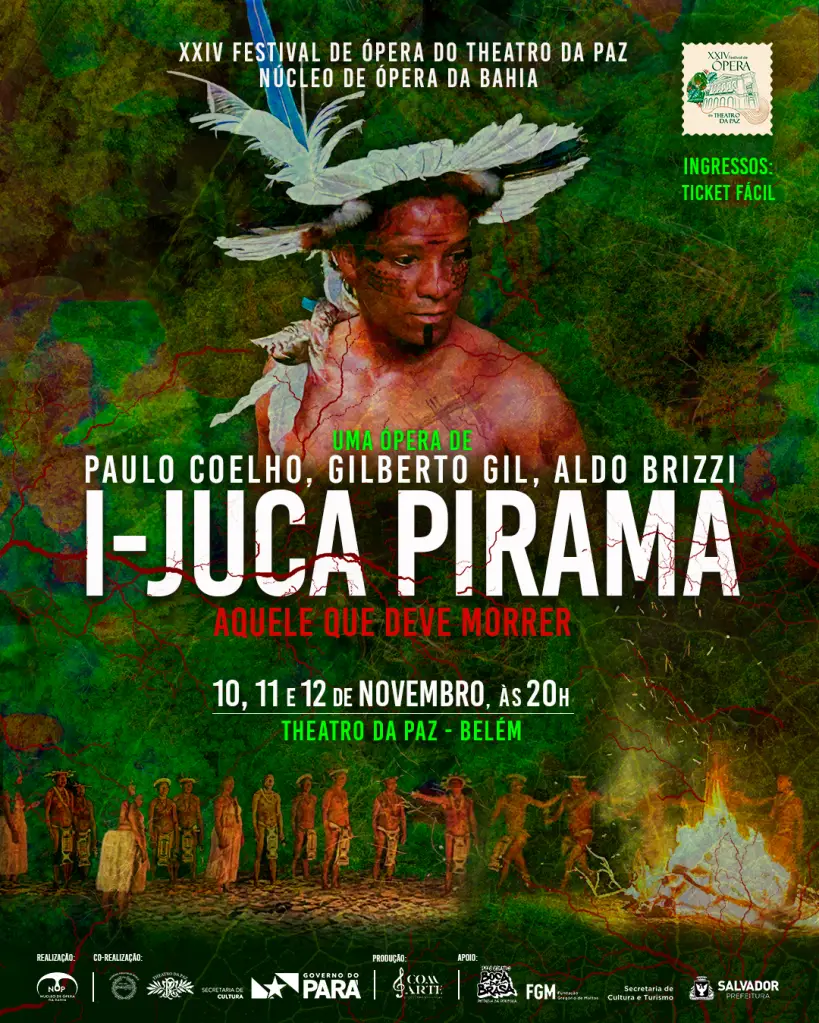
I-Juca Pirama
Video capture
Director : Nicolas Lesoult
Duration : 90 min
Year of production : 2025
Broadcaster : France Télévisions
Support : CNC
Co-producer : Aldo Brizzi, Gilberto Gil, Paolo Coelho
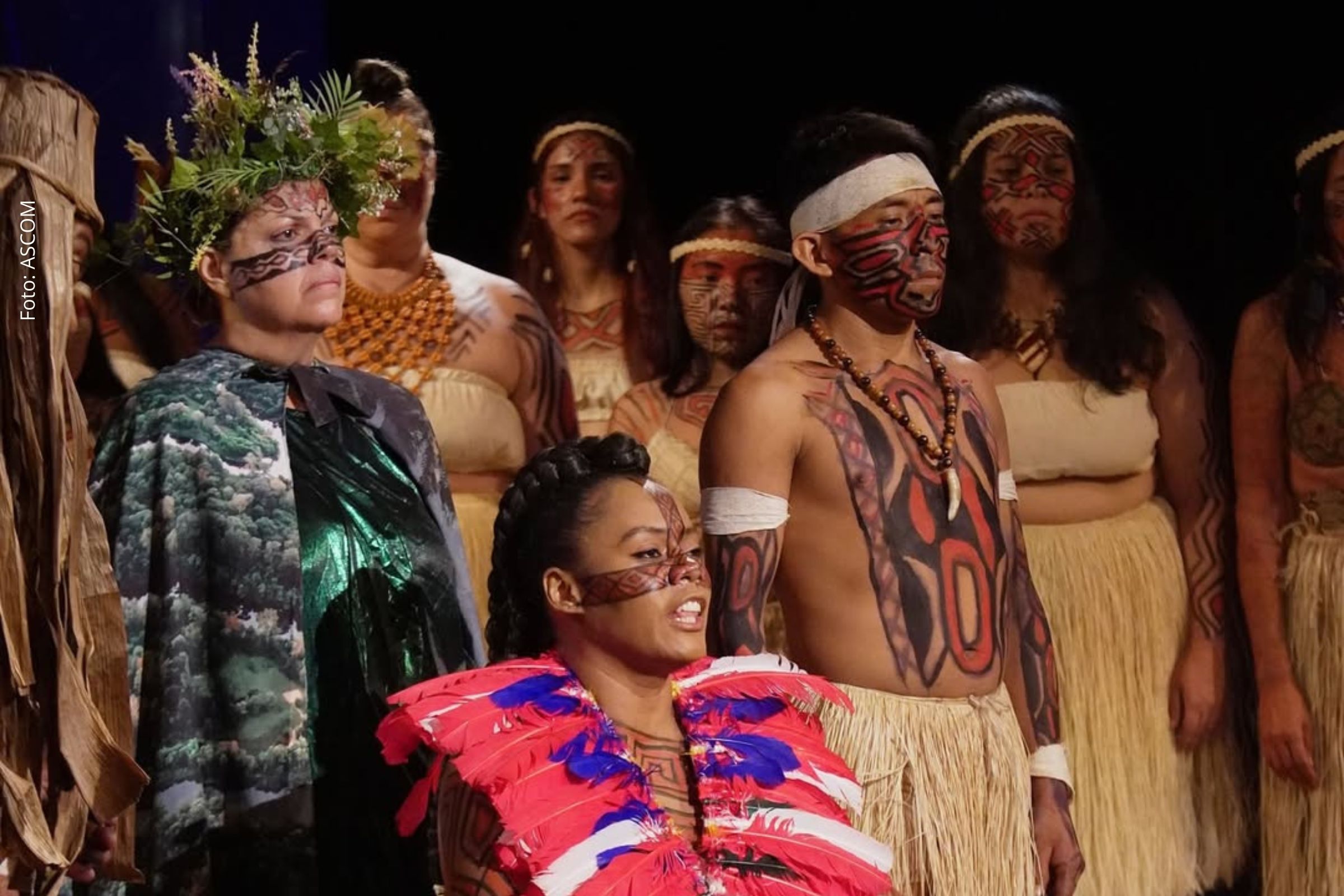
"I-Juca Pirama" weaves a dialogue between two eras to shed light on the enduring violence against Brazil's indigenous peoples. Deep in the Amazon rainforest, I-Juca Pirama, a young warrior captured by an enemy tribe, is destined for ritual sacrifice. But when he reveals to the chief his grief at leaving his father behind, the chief, moved by his words, spares his life.
A one-act opera inspired by the poem by Gonçalves Dias, I-Juca Pirama weaves a dialogue between two eras to shed light on the enduring violence against Brazil's indigenous peoples.
Deep in the Amazon rainforest, I-Juca Pirama, a young warrior captured by an enemy tribe, is destined for ritual sacrifice. But when he reveals to the chief his grief at leaving his father behind, the chief, moved by his words, spares his life. This act of clemency disrupts the established order and draws the disapproval of the community.
In a shift toward the present, the hero reappears in another form, immersed in the contemporary world. Questioned by a journalist, with whom an unusual bond develops, he becomes the bearer of a memory that refuses to fade. Across the two eras, echoes resonate, revealing the invisible continuity of mechanisms of oppression.
Through this interplay of correspondences, I-Juca Pirama questions our relationship to history, transmission, and otherness, offering a work that is at once poetic, political, and deeply relevant to our times.
LES FILMS DE LA BUTTE © All rights reserved 2026